



"Whitney had come to personify the evils of
rogue capitalism and banking excess that defined the late 80s."
—By Pulitzer Prize Winner, James Bandler
The Boston Sunday Globe, October 27, 1996
For over fifty years, Life Points co-founder, E. Pratt “Mark” Whitney, has engineered systems to disrupt legacy monopolies, duopolies and cartels. His one-of-a-kind career spans dot-com breakthroughs, 100+ consecutive quarters of legal-tech profitability, award-winning performance art, real estate fintech architecture, 700 days in five federal prisons, one conjugal visit, and that’s from the guy in the next cell.

With Whitney fully recovered from his ironic 2022 flatlining experience on National Fried Chicken Sandwich Day, ‘Shiny & Shady’ are back to bottom lining, serving as mass customized, business managers for your mouth. Why? Because as Shady regularly reminds us, “That’s not Jack in the box, it’s you in the box!
Whitney has 45 years of experience:
• Restructuring Professional Service Industries
• Bootstrapping Clean Sheet Enterprises
• Establishing and Implementing Mass Customized Relationship Management & Direct Marketing Models
Prison Break
Whitney is an expert systems builder whose wares have been peddled, adopted and acquired by a Fortune 500 company. In 1991, as a newly broke and bankrupt entrepreneur in his 20s, Whitney was unconstitutionally banished to Federal prison for giving banks the tax returns he should’ve filed with IRS.
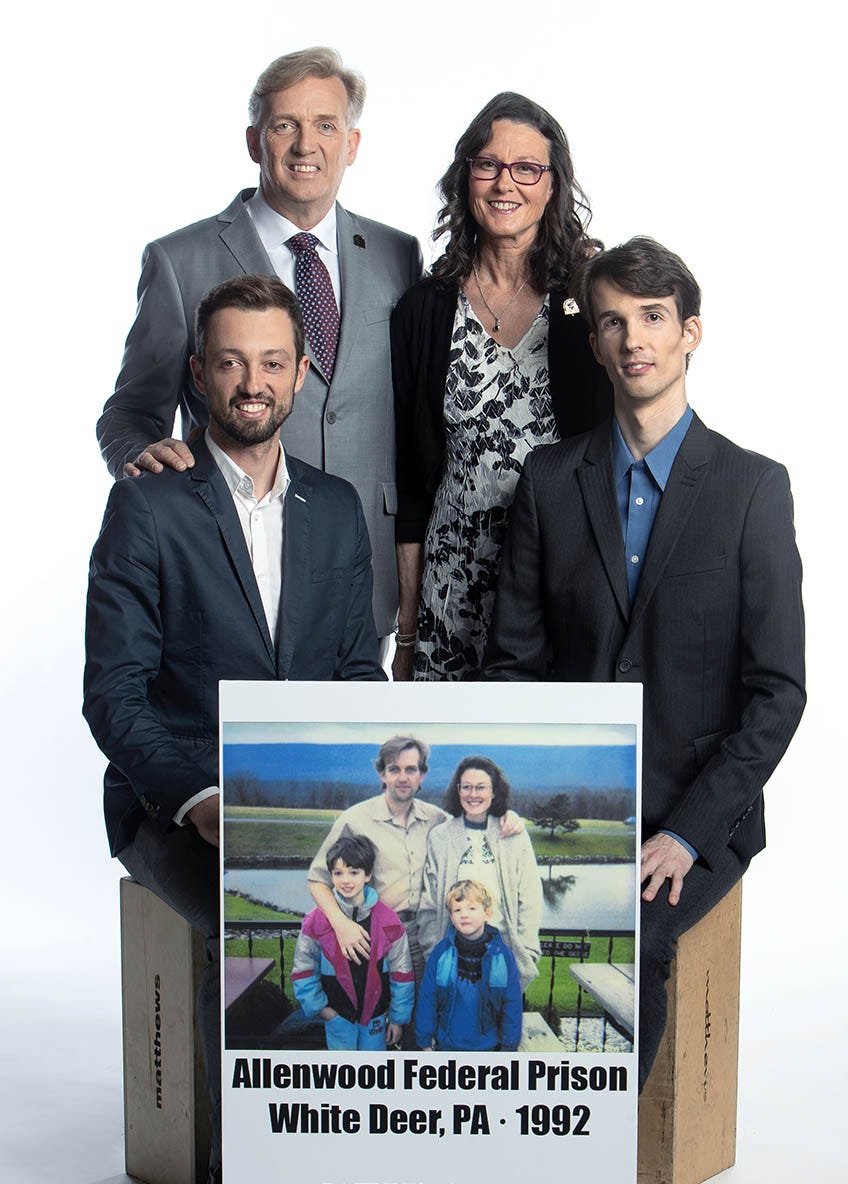
Fifteen months later, writing as a high school graduate with a prison typewriter, Whitney persuaded future Justice of the Supreme Court, Stephen G. Breyer, to declare his term of imprisonment so unconstitutional, that Breyer faxed an order to the warden, ordering Whitney’s immediate release.
As Co-Executive Producer of Shiny & Shady, The Late Mark Whitney, who recently died naked in his own shit on a trauma table, today treats his own human biology with the same cold, analytical, asset-stripping forensic strategy he used to disrupt the multi-billion dollar legal publishing duopoly, and otherwise.
The Recruiting Services Industry
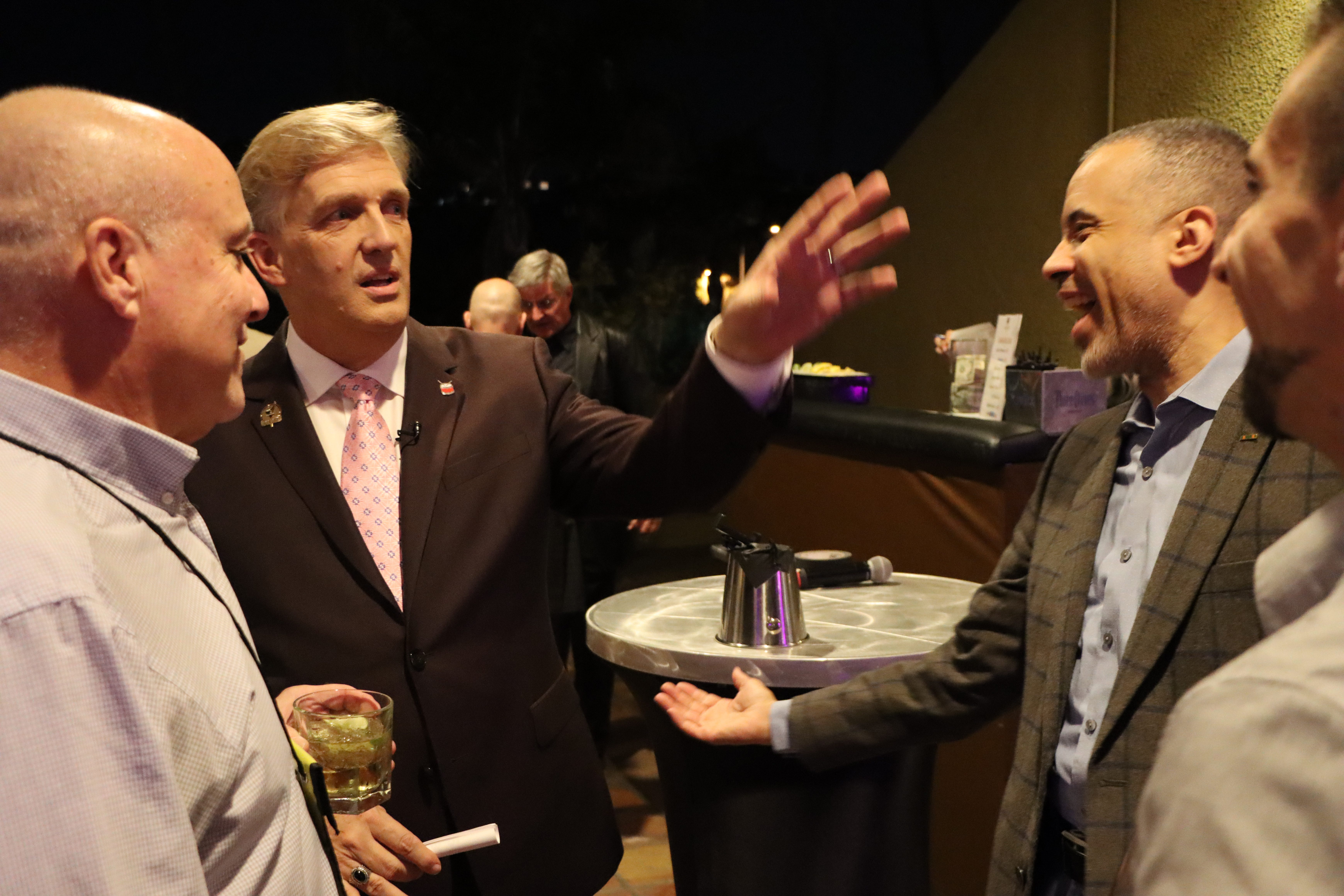
In 1996, two years before Google, and as a co-founding member of AIRS®, Whitney co-created his first dot com, revolutionizing the corporate recruiting industry. For the next three years, he toured America’s boardrooms and ballrooms, running his mouth for nine hours straight, regularly bringing in upwards of $50,000 in a single day.
Thought leaders from Microsoft, Oracle, Apple, Disney and most of the Fortune 500 embraced Whitney’s system for using the Internet to gather and leverage competitive intelligence on behalf of their human capital initiatives. AIRS® was acquired by ADP® and is still in business.
The Legal Services Industry
“The foremost amateur attorney in the history of the United States!”
~NYTheatre.com
In 1999, Whitney launched THELAWNET Corporation, which he has since led to 100+ consecutive profitable quarters. For decades, attorneys, law firms, judges, courts, governmental instrumentalities and indigenous nations have trusted TLN to provide them with comprehensive access to the law via a single intuitive interface.
Systems Architecture Demo
Watch below as master systems architect, E. Pratt “Mark” Whitney, demonstrates the algorithmic data-retrieval engine built to index millions of federal and state judicial opinions. Whitney uses the identical pattern recognition schema in service of Shiny & Shady’s Piehole Protocol.
Procedural Game Theory + Elite Litigation Strategy = THELAWNET
Before database syndication democratized legal research via TLN’s signature software, Equalizer 7, Whitney operated as an unassuming, high-stakes operative in various federal cases and controversies, often over the objection of federal authorities. He regularly exploited procedural blind spots to undermine premium brand sophists and elite legal cartels.
United States v. Roger Lussier & Lyndonville Savings Bank v. Lussier
“There’s no doubt that Mr. Lussier wore a lot of hats. Besides being the bank’s chairman, he invested in real estate deals and sold off foreclosed properties through his own auctioneering service. Mr. Lussier grew up on a dairy farm and never got past the eighth grade. Even so, when he retired in February, after 27 years, he left behind one of the best capitalized and most consistently profitable banks in the country.”
~Editorial Board at The Wall Street Journal, November 29, 1993
When powerhouse Boston firm Hale & Dorr (the antagonist immortalized in A Civil Action) targeted a popular, old-school, small town, convicted bank president in Vermont’s remote Northeast Kingdom, with an $8.7 million federal lawsuit, they relied on boilerplate hubris. The banker relied on Mark Whitney.
“If George Bailey and Boss Hogg had a lovechild, it would be Roger Lussier. He was the most popular and most reported on federal criminal defendant in New England. Shortly after Roger self-surrendered to Allenwood to serve his 46 month term of imprisonment, Caledonia County residents rallied, presenting the warden with a 1,200 signature petition demanding his immediate release,” Whitney recalled. “I loved the guy and would do anything to help him.”
In their statement of jurisdiction, Hale & Dorr falsely claimed their state-chartered bank client was a federally chartered bank client, thereby unlocking the door of the federal court, while sidestepping potential humiliation at the hands of a Lussier-loving Caledonia County jury. The firm did this knowing that their Harvard Law sleight-of-hand would likely go undetected, thereby securing a quick win under federal supplemental jurisdiction theory.
Whitney spotted the lie instantly. But instead of exposing it immediately—which would have handed Hale & Dorr a second bite at the apple in state court—Whitney gamed out a multi-layered procedural scheme. He directed civil defense counsel and Lussier loyalist, Andy Field, to stand mute on the jurisdictional defect, while letting the federal case drag out for years under a Rope-A-Dope Guise of protecting Lussier’s rights, until such time as the Vermont state statute of limitations had fully run.
Because federal subject-matter jurisdiction can never be waived and can be challenged at any time—even after final judgment—the opposition had zero exit strategies left. Whitney pre-sandbagged them years ago, forcing Hale & Dorr to humiliate itself on appeal.1
The resulting landmark Second Circuit decision2 was authored by future Supreme Court Justice Sonia Sotomayor, who famously tore Hale & Dorr’s Sr. Litigation Partner & Harvard Law Alum, Richard A. Johnston, a new one at oral argument. In the run-up to her confirmation as Associate Justice of the Supreme Court of the United States, Sotomayor submitted the foregoing saga of litigation to the U.S. Senate Judiciary Committee as one of the most significant appellate matters of her exemplary judicial career.3
Around the same time, Whitney wrote a letter to F. Lee Bailey over the signature of his somewhat client, Lussier, citing the precise judicial precedent that would result in a Second Circuit appellate win in Lussier’s criminal case. Bailey demurred, and eventually Bailey’s malpractice provider was forced to make Lussier whole with a check in the amount of $426,000.4
Whitney’s devastatingly effective consulting business so rattled U.S. Probation that it deployed the U.S. Marshals to arrest him, with an eye toward returning him to prison on a minor supervised release violation for having “contact” with felons. Whitney counter-sued, claiming that (i) while he enjoyed regular, frequent contact with felons and their counsel, there was zero evidence of a criminal association, and (ii) it was in fact Probation officials who were violating a core condition of his release that required him to work full-time and support his young family.5
The result? Former legendary Vermont criminal defense attorney, turned Federal Judge, William K Sessions, II, issued an oral injunction from the bench securing Whitney’s operations, stating on the record:
“You will leave Mr. Whitney alone. He is providing a much-needed service.”
The foregoing historic legal victories didn’t just defeat some of the most iconic boldfaced names in American jurisprudence—they assisted in providing much of the startup capital required to build THELAWNET.
“Lussier was four years of my life. I think Roger trusted me to manage the dozens of lawsuits that always follow the criminal conviction of a wealthy person, because I was the rogue capitalist with all the learning,” Whitney recalls. “Roger only made it to the eighth grade, whereas I was fully armed with a high school diploma.”
Speaking, Writing, & Narrative Architecture
“Mark—you start out with a premise... a big idea, and then you start to fill it in, as opposed to what most people do, which is just let experience slap them across the face enough times until they finally get it.” ~Robert McKee (portrayed by Brian Cox in ‘Adaptation’ (below)
In Issue 05 of Robert McKee’s STORY Magazine, the world’s premier narrative authority dedicated an exclusive run to the three creators he recognizes as role models when it comes to live storytelling. Positioned alongside household names, Drew Carey and Russell Brand, Mark Whitney was profiled for his mastery of the spoken word.
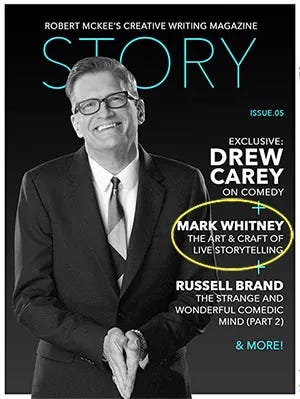
“The comic mind is an idealist who thinks the world should be perfect... and when they look around and see what a miserable place it is, it pisses them off.” — Robert McKee
Whitney’s sense of humor has been central to his success as an entrepreneur who communicates at the highest level. His creative writing, speaking, production and development skills have been showcased on Robert McKee’s Storylogue alongside Steven Pressfield (The Legend Of Bagger Vance), Ed Saxon (producer, Silence of The Lambs), Zak Penn (writer, X-Men), Paul Haggis (writer, Best Picture Oscar winners, Crash and Million Dollar Baby) and Sarah Treem, (Writers Guild Award Winner, House Of Cards).
From 2007-2013 Whitney toured his autobiographical political dramedy, Fool For A Client, on the North American Independent Theatre Circuit, where he won Best Solo Awards at performing arts festivals in San Francisco, Los Angeles, New York, Minneapolis, Boulder, and Washington, D.C.
The Art of the Push, the Pivot, and the Coffee Can Vault
Long before taking on the multi-billion dollar Westlaw and Lexis duopoly (aka Wexis),6 an 18-year-old Mark Whitney cut his teeth peddling vacuum cleaners door-to-door along the back roads and Green Mountains of Vermont.
“I joined the University of Electrolux, where I majored in getting the f**king money.”
Watch the short clip below as Whitney recaps the psychological theater of entering a stranger’s living room, intentionally soliciting, then systematically finessing a series of “No’s,” until eventually he uncovers Mrs. Jones’ hidden cash reserve.
“I learned down there at Electrolux—it doesn’t matter what you want in life, you are always some unknown number of 'No’s' away from a 'Yes.'”
Mark Audits, Analyzes, Then Rewrites Steve Jobs’ Iconic Stanford Commencement Speech
In 2015, Whitney crafted and delivered a 75 minute corporate keynote for Toastmasters International’s Annual Convention called: “Bring Your Show: The Art & Business Of Humorous Speaking”. Lark Doley, the then-President of Toastmasters International was in the front row. A popular highlight among the world’s 1M+ Toastmasters, is Whitney’s 3-1/2 minute take on Steve Jobs’ speech to Stanford grads.
“If there is one video I could recommend to you, to get the real essence of public speaking, Bring Your Show would be it!” ~Dananjaya Hettiarachchi, 2014 World Champion of Public Speaking